
The Mistake Almost Everyone Makes First
The garage door won't budge, the opener is humming or silent, and the car is trapped inside. The instinct is to reach up, grab that red cord hanging from the trolley, and yank it. It feels like the obvious fix: disconnect the opener, push the door up by hand, problem solved. It's tempting because it's fast, it requires no tools, and most people have seen someone do it before without incident.
The problem is that the emergency release cord doesn't fix anything. It only disconnects the door from the opener. If the opener was the only thing holding the door up because a spring has already failed, pulling that cord removes the last thing keeping tens of kilograms of wood, steel, or fiberglass from dropping straight down.
What the Cord Is Actually For
Every residential garage door opener has a trolley that rides along a rail and connects to an arm attached to the door. The release cord disengages that trolley from the drive mechanism. Once disconnected, the door should move freely by hand, supported entirely by its springs, not the opener. This is useful in two situations: a power outage when you need to get a car out, or an opener malfunction (a worn gear, a dead circuit board, a sensor fault) when the door itself is otherwise fine and properly balanced.
How It's Supposed to Work
- Pull the cord straight down to release the trolley.
- Lift the door by hand; it should rise smoothly and stay roughly where you leave it, held by the springs.
- Lower it fully, then reconnect by pulling the cord again (often toward the opener) until you hear the trolley re-engage, or by running the opener which will re-latch it automatically.
What Goes Wrong, and How Badly
A properly balanced door, with intact torsion or extension springs, will stay put at almost any point when lifted a few feet and released. That balance is the whole safety system. When a spring has already broken or weakened, the opener's motor may be the only force keeping the door from free-falling, especially if it was struggling, making grinding noises, or moving unevenly just before it stopped.
Pull the release cord on a door like that and you remove the opener's support instantly. A standard double garage door can weigh well over a hundred pounds, and a single can still be heavy enough to cause serious injury or damage if it drops from a raised position. This is the scenario that sends people to the emergency room, and it's also how cars parked halfway out get crushed or trim gets torn off.
Signs the Door Is Not Safe to Release
- The opener was straining, reversing unexpectedly, or making a loud bang before it stopped.
- One side of the door looks lower than the other, or a cable looks loose or frayed.
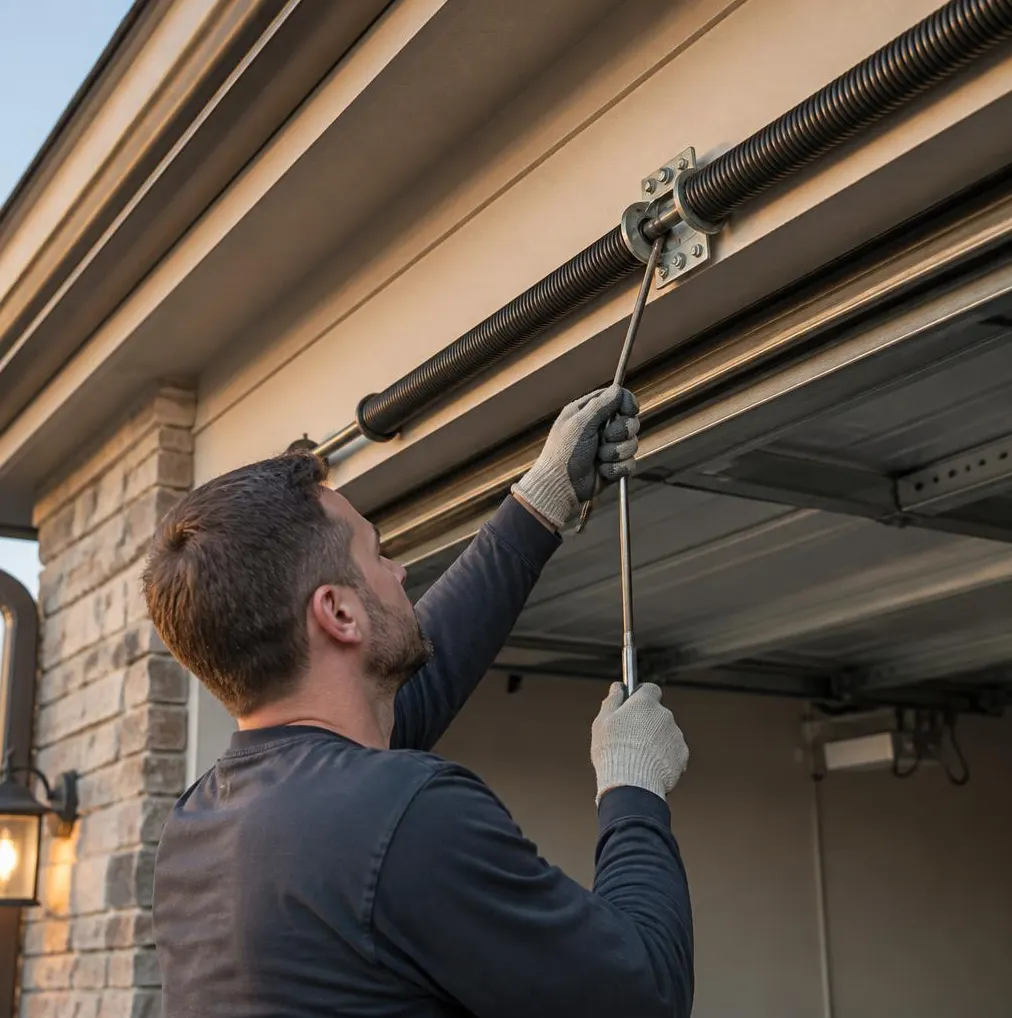
- You can see a gap in the torsion spring above the door, or a spring that looks stretched or separated.
- The door has felt heavier than usual to lift by hand recently.
If any of these apply, don't pull the cord. Call for spring replacement instead; a technician can safely clamp and support the door before disconnecting anything.
The Specific Actions That Prevent a Bad Outcome
- Test balance before you release. With the door closed and the opener still connected, look up at the springs. If they look intact and even, proceed. If anything looks off, stop.
- Lift a few inches manually first, if you can, before fully disengaging. A balanced door barely resists; a door with a failed spring will feel suddenly heavy or drop.
- Keep hands clear of the track and bottom panel once the door is moving. Fingers and tracks are a common pinch point during manual operation.
- Reconnect promptly once power or the opener issue is resolved. Leaving the trolley disengaged for days means the opener's safety reversal features aren't active if anyone else tries to use the door.
San Francisco's weather adds a slower-moving risk to this system. Salt air along the coast and the city's winter rains corrode springs and cable ends over months, while summer dust and dry-season grit from wildfire smoke can gum up pulleys and rollers. A door that's been fine for years can develop a weak spring quietly, which is exactly the situation that makes the release cord dangerous rather than helpful. Earthquake retrofit brackets and reinforced tracks, common in older SF garages, can also shift slightly over time, throwing off the door's balance even when the spring itself looks okay.
When to Call San Francisco Garage Door Service
If your door looks uneven, the opener has been straining, or you've already pulled the cord and the door won't stay up, that's a job for a technician, not a DIY lift. We handle spring replacement safely, with the door properly clamped before any tension is released, and we also diagnose garage door opener repair issues so you know whether it's the motor, the sensors, or the gears causing the stall in the first place. If your door is original to the house and the springs are decades old, we can also talk through whether a tune-up or a full installation makes more sense long-term.
If something feels off with your garage door, don't guess with the release cord. Call San Francisco Garage Door Service on Silver Ave and we'll come take a look, anywhere from the Excelsior to Daly City, Pacifica, and beyond.