
The One-Sentence Rule
If your garage door hesitates, squeaks, or lets in a draft on a dry October afternoon, it will do all three worse once the winter rains arrive — so the fixes are easiest and cheapest if you make them now, before the first real storm. The exceptions: doors on fully enclosed garages with no weather exposure can usually skip the sealing steps, and newer doors (installed in the last two or three years) may only need a light inspection rather than a full tune-up.
Why This Season Is Different
San Francisco doesn't get snow or hard freezes, but the garage door still takes a beating from late fall through winter. Months of dry season dust, pollen, and the occasional wildfire smoke haze settle into tracks and hinges, and then winter rain turns that grit into a gummy paste that grinds against metal every time the door moves. Add in salt air if you're closer to the coast — Pacifica, the western neighborhoods, Daly City — and you've got the two biggest enemies of a garage door system working at once: moisture and abrasive debris.
Clear Out the Dry-Season Buildup First
Before you do anything else, wipe down the tracks and rollers. Months of dust and ash residue cling to the grease on rollers and hinges, and if you skip this step, fresh lubricant just traps the grit against the metal instead of protecting it. Use a dry rag first, then a garage-door-specific lubricant (not WD-40, which washes away quickly and attracts dust) on hinges, rollers, and the torsion spring. Avoid spraying the tracks themselves — they should stay dry so the rollers can grip properly.
Check the Weatherstripping
The rubber seal along the bottom of the door and the strips along the sides are your first defense against driving winter rain. Look for cracking, flattening, or gaps where you can see daylight. A compromised seal doesn't just let water in — it lets wind-driven rain splash several feet into the garage, which is a problem if you store anything on the floor or if the garage shares a wall with living space, common in many San Francisco homes. Replacement weatherstripping is inexpensive and a reasonable DIY job if the track it sits in isn't damaged.
Inspect for Rust, Especially Near the Coast
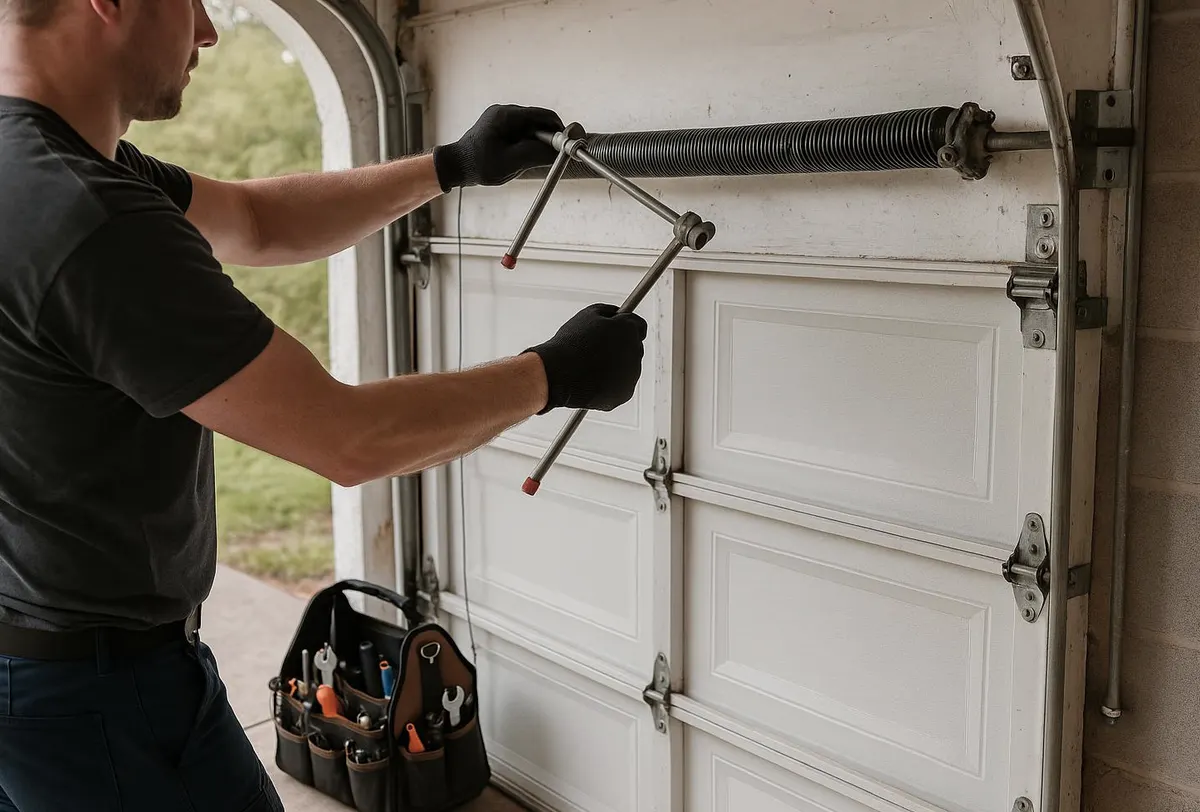
Salt air accelerates corrosion on hinges, springs, and the bottom bracket faster than people expect, even a few miles inland. Surface rust on hinges is usually cosmetic, but rust on the torsion spring coils or the bottom brackets is a different story — it weakens metal under tension, and a spring failure under load is sudden and can be dangerous. If you see flaking or pitted rust on a spring, that's not a maintenance item anymore; it's a replacement item.
Test the Door's Balance
Disconnect the opener (pull the release, don't skip this) and lift the door halfway by hand. It should stay put. If it drifts down or shoots up, the springs are out of balance, which makes the opener work harder all winter and shortens its life. This is also the time to notice if the door feels heavier or jerkier than it did in summer — cold, damp air can make older springs lose tension faster, and a door that was merely sluggish in September can become a stuck door in December.
Protect the Opener From Power Blips
Winter storms bring the occasional power outage, and a garage door opener with no backup battery means using the manual release every time the power drops. If your opener is more than eight or ten years old, it likely doesn't have battery backup built in. Newer units do, and it's worth the upgrade if you rely on the garage as your main entry.
Don't Forget the Photo Eyes
The small sensors near the bottom of the tracks stop the door from closing on an obstruction, but they're also the first thing thrown out of alignment by a bump from a bike, a stored ladder, or just seasonal settling. Wipe the lenses and make sure both sensors' lights are solid, not blinking. A door that reverses randomly, or won't close at all, is often a five-minute sensor fix rather than a major repair.
When to Call San Francisco Garage Door Service
If you've gone through this list and still have a door that's unbalanced, a spring with visible rust or pitting, or an opener acting unpredictably, it's time for a professional look rather than more DIY troubleshooting. We handle Spring Replacement for doors showing wear or corrosion, and our Garage Door Maintenance & Tune-Up service covers the full inspection — rollers, tracks, cables, balance, and opener function — so you're not guessing what else might fail mid-storm.
Give San Francisco Garage Door Service a call before the rain really sets in. We work throughout San Francisco, Daly City, South San Francisco, Pacifica, Brisbane, Colma, San Bruno, and Millbrae, and we'd rather get your door squared away now than pull it out of a jam later.